OpenAI boss Sam Altman has managed to annoy just about every PC owner in one sentence. On a podcast this week he argued that, during a memory shortage, it’s “quite terrible” for the world’s DRAM to be sat in people’s own computers rather than in busy data centres. The Sam Altman RAM comment has gone down badly with UK builders paying silly money for memory. So is he right? Partly. But the bit he’s right about is a lot narrower than the headlines suggest.
Quick answer
- What he said: “from a global allocation perspective”, it’s “quite terrible” for everyone to keep a share of the world’s limited DRAM in their own computer, used, he claimed, 5% of the time.
- Where he has a point: memory in a busy data centre is used far more of the time than memory in a home PC.
- Where it falls down: the shortage is driven mainly by data-centre demand for HBM, not by home PCs, and he gave no data for the 5% figure.
- For you: your PC still needs RAM for games, everyday work and local AI. Just don’t panic-buy at today’s prices.
What Sam Altman actually said
The remark came on John Collison’s Cheeky Pint podcast, published on 29 October 2026. Collison asked why memory makers weren’t flooding the market while prices are this high. Altman talked about DRAM makers’ history of boom and bust, then turned to people who want to run AI models locally. According to the official episode transcript, he said:
“But from a global allocation perspective, actually, it’s quite terrible to have everybody have a bunch of the world’s limited supply of DRAM sitting in their own computer. And, being used […] 5% of the time. You want maximum utilization in the cloud if you’re trying to deal with this very supply constrained environment.”
The same wording is reported by The Verge and Tom’s Hardware. You may have seen it summed up as calling local AI a terrible allocation of scarce resources. That’s a paraphrase doing the rounds online, not his words. He didn’t say where the 5% figure came from, and he offered no data to back it up.
Where he has a point
Strip away the outrage and there’s a fair economic argument here. A home PC runs a model only while you’re using it. A data centre shares the same hardware between many users, so its memory is busy far more of the time. Capital & Compute’s analysis puts numbers on it: a self-hosted rig is cheap per token when it runs flat out, but much dearer at personal levels of use. If the only goal is squeezing the most work out of every gigabyte during a shortage, shared cloud hardware wins.
Where the argument falls down
The trouble is that home PCs aren’t what’s eating the world’s memory. Market analyst TrendForce estimates that high-bandwidth memory (HBM), the stacked DRAM fitted next to AI accelerators in data centres, will take about 22% of the top three suppliers’ DRAM wafer input by the end of 2026 but deliver only about 9% of the bits. In 2027 it expects that to rise to around 30% of wafers for 13% of bits. In other words, AI hardware uses a big slice of production capacity for a relatively small amount of memory, and that’s squeezing the ordinary DRAM that ends up in PCs.
It’s also worth remembering who’s talking: Altman spent part of the same interview on OpenAI’s own chip and data-centre plans.
And most memory in home PCs was never bought for AI. If it’s idle much of the day, it was idle before anyone ran a chatbot on it.
What it means for UK RAM and PC prices
You don’t need us to tell you memory has got expensive. UK site OC3D tracked a Crucial Pro 32GB (2x16GB) DDR5-6000 CL36 kit on Amazon UK: it was £79 on 18 September 2025 and £422 on 14 October 2026, more than five times the price. When we checked Scan’s DDR5-6000 range on 31 October 2026, a Corsair Vengeance 32GB (2x16GB) DDR5-6000 CL38 kit was £469.99, and a 64GB (2x32GB) Vengeance RGB kit was £879.98 (both checked 31 Oct 2026).
Those prices feed through to whole PCs, laptops and consoles too. We covered the wider squeeze in our report on memory and SSD prices still climbing.
Why your PC still needs RAM at home
Gaming
Games don’t run in the cloud just because memory is dear. The Steam Hardware Survey for September 2026 shows 32GB as the most common amount of system RAM among Steam users, at 42.22%, with 16GB on 37.82%. Cloud gaming exists, but it depends on your broadband and a subscription.
Local AI
Running a model on your own machine has real benefits that a utilisation chart doesn’t capture: it works offline, your data stays on your computer, and nobody can change the model’s rules overnight. As Capital & Compute notes, most local AI runs on memory people already own, so it adds little new demand. Smaller models will run happily on the 16GB or 32GB many PCs already have.
Should you buy RAM now?
If your PC works fine, don’t upgrade at these prices. If you genuinely need more, buy what you need and compare UK shops. Our RAM and storage upgrades guide explains what’s worth doing. In our shop you’ll find the Crucial Pro 32GB DDR5-6000 kit and the Corsair Vengeance 32GB DDR5-6000 CL30 kit. If storage is the real squeeze, our PCIe 5 vs PCIe 4 SSD guide shows where you can save.
Verdict (opinion)
This is our view. Altman has a narrow point: memory in a busy data centre gets used more than memory in your spare room. But the claim that home PCs are a poor use of DRAM gets the shortage the wrong way round. On TrendForce’s figures, the big squeeze comes from data-centre HBM, and that’s the market OpenAI is buying into. His 5% figure came with no evidence. Home RAM runs our games, our work and, increasingly, private AI. That’s not waste, that’s what a computer is for.
FAQ
What did Sam Altman say about RAM?
On the Cheeky Pint podcast published on 29 October 2026, Sam Altman said that from a global allocation perspective it is quite terrible for everyone to keep part of the world’s limited DRAM supply in their own computers, which he said are used 5% of the time. He argued that cloud data centres get more use out of memory during a shortage.
Did Sam Altman call local AI a terrible allocation of scarce resources?
Not in those words. That phrase is a paraphrase used online. His actual words, according to the transcript, were that it is quite terrible from a global allocation perspective.
Is the RAM shortage caused by home PCs?
Mostly no. TrendForce estimates HBM for AI data centres will take about 22% of the big three suppliers’ DRAM wafer input by the end of 2026 while giving only about 9% of the bits, which squeezes ordinary DRAM supply.
Where did the 5% figure come from?
Altman did not give a source or any data for the claim that home computers’ memory is used 5% of the time.
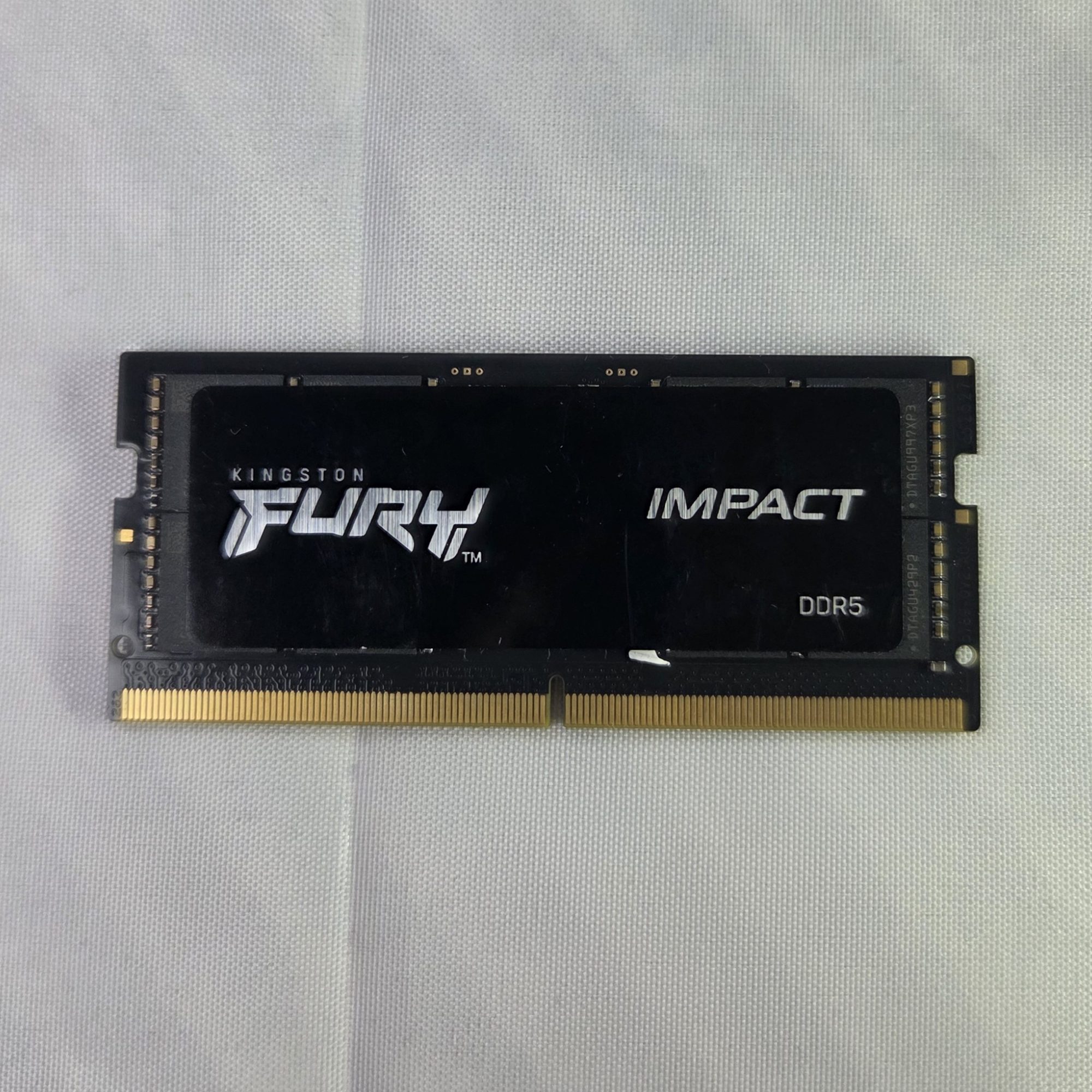
Featured image: Kingston FURY Impact DDR5 32GB module, photo by ITEagle Europe (Sebastiaan Broekhoven) via Wikimedia Commons, CC BY-SA 4.0.