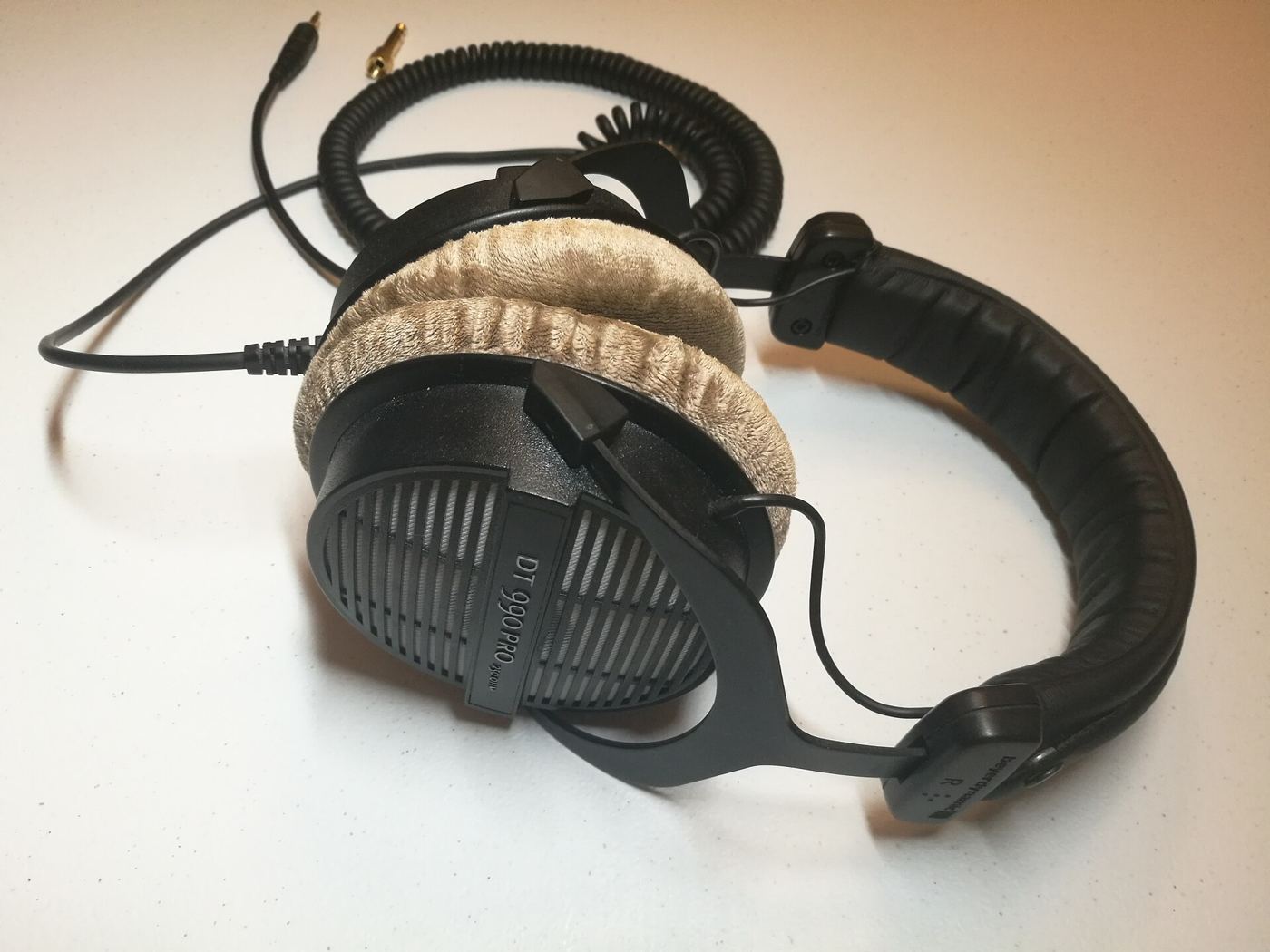
Shopping for a new pair of over-ear headphones or a gaming headset, you’ll often see them described as open-back or closed-back. It sounds like a small detail, but it changes how they sound, how much you hear of the outside world and how much everyone else hears of your music. Here’s our guide to open-back vs closed-back headphones, and which type suits you.
Quick answer
- Closed-back: block outside noise and keep your sound in. Best for commuting, offices, shared homes, recording and noisy places.
- Open-back: a more natural, spacious sound, but they leak sound and let noise in. Best for quiet rooms at home.
- Gaming: open-backs give a wider soundstage, while closed-backs suit shared rooms and streaming with a mic.

What are closed-back headphones?
Closed-back headphones have solid, sealed ear cups. Beyerdynamic explains that the housing is designed so little or no ambient noise gets in, and sound that might annoy people nearby doesn’t spill out. That’s why closed-backs are the usual choice for listening on the move.
What are open-back headphones?
Open-back headphones have ear cups with openings or acoustically transparent material, often a visible grille. According to Harman’s help centre, air and sound pass freely through the cups, which avoids pressure building up and gives a more natural sound. The catch is that they provide almost no isolation, so you hear the room around you, and anyone nearby hears what you’re listening to.
Open-back vs closed-back: the key differences
Sound and soundstage
Audio-Technica says open-back headphones can deliver a more natural sound, with a wider and deeper soundstage, because the open cups reduce reflections inside the ear cup. Beyerdynamic says they sound a little more voluminous and detailed, with a better sense of space, so music feels less like it’s coming from inside your head.
Closed-back headphones can still sound excellent. Audio-Technica notes that many accurate studio monitor headphones are closed-back, and that the sealed cup can be tuned, much like a speaker cabinet, to strengthen bass. Harman also says closed-backs tend to give a slight boost in bass.
Isolation: closed-back wins
Closed-backs reduce outside noise, so you can hear quiet details without turning the volume up. Open-backs let in noise from the room, which makes them a poor choice on a train or in a busy office.
Sound leakage: closed-back wins
Closed-backs keep your audio to yourself. Open-backs leak sound, so people nearby will hear your music. Sennheiser notes the leakage is more noticeable at high volumes. It matters for recording too: Audio-Technica points out that sound leaking from headphones can be picked up by a microphone.
Comfort: open-back often wins
Audio-Technica says open-back headphones are often lighter, as there’s less ear cup material, which helps during long sessions. Because air can move through the cups, they may also feel less stuffy, though comfort depends a lot on the clamp, pads and your head shape.
What about semi-open headphones?
Semi-open headphones try to combine some advantages of both designs. Beyerdynamic says its semi-open models sound closer to open-back than closed-back, so expect some leakage.
Which is best for gaming?
Audio-Technica says many gamers prefer open-back headsets for their natural sound and wider soundstage, which can make it easier to place sounds around you. But if you game in a shared room, stream with a microphone, or live with people who’d rather not hear every explosion, a closed-back headset is the practical choice.
Gaming headsets come in both designs, so check the product details if you specifically want one type. You can browse the headsets in our shop, and our Arctis Nova 5X vs 7X comparison looks at two popular wireless options for Xbox.
Which should you buy?
- Commuting, travel or the office: closed-back.
- Quiet room at home, focused music listening: open-back.
- Recording vocals or podcasts: closed-back, to stop sound bleeding into the mic.
- Gaming in your own room: either; open-back for soundstage, closed-back for isolation.
- Sharing a room or a bed: closed-back.
Prefer earbuds? See our AirPods Pro 3 vs Galaxy Buds3 Pro comparison. Building out your desk? Our desk gadgets guide has more ideas, and the Black Friday 2026 guide covers when to buy.
Verdict
Neither type is better overall. As Sennheiser puts it, it comes down to personal preference and where you listen. Closed-back headphones are the versatile, everyday choice, keeping noise out and your audio in. Open-back headphones are the treat for a quiet room, with a more natural, spacious sound. We haven’t tested specific headphones for this guide; it’s based on explanations from Audio-Technica, Beyerdynamic, Harman and Sennheiser. See how we test and choose products.
FAQ
Do open-back headphones leak sound?
Yes. Their ear cups are designed to let sound pass through, so people nearby can hear what you’re listening to, especially at higher volumes.
Are open-back headphones better for gaming?
Many gamers prefer them for their wider soundstage, but closed-back headsets are better if you share a room or use a microphone near other people.
Do closed-back headphones have more bass?
Often, yes. The sealed ear cup can be tuned to strengthen bass, and Harman says closed-backs tend to give a slight bass boost.
Can I use open-back headphones on a train?
You can, but they won’t block out noise and others will hear your audio. Closed-back headphones are a much better choice for travel.
Featured image: Beyerdynamic DT 990 Pro, photo by ChromeGames923 via Wikimedia Commons, CC BY-SA 4.0.