As an Amazon Associate, TrueNorth Tech X earns from qualifying purchases. Read our affiliate disclosure.
ZX Spectrum vs Commodore 64: if you were at school in Britain in the mid-80s, you probably picked a side. You had a Speccy with rubber keys or a C64 in its beige “breadbin” case, and you defended it in the playground as if your life depended on it. Forty-odd years later, we’ve gone back over the prices, the specs and the games to see what the fuss was really about.
Quick answer
- Cheaper: the ZX Spectrum, by a mile. The 48K model cost £175 at launch, against £399 for the C64 in the UK.
- Better sound and smoother graphics: the Commodore 64, thanks to its SID sound chip and hardware sprites.
- Bigger in Britain: the Spectrum, which sold over five million worldwide and was Britain’s top-selling computer until the Amstrad PCW.
- Bigger worldwide: the C64, with estimates of 12.5 to 17 million sold.
- Play them today: The Spectrum or THEC64.
Two very different machines
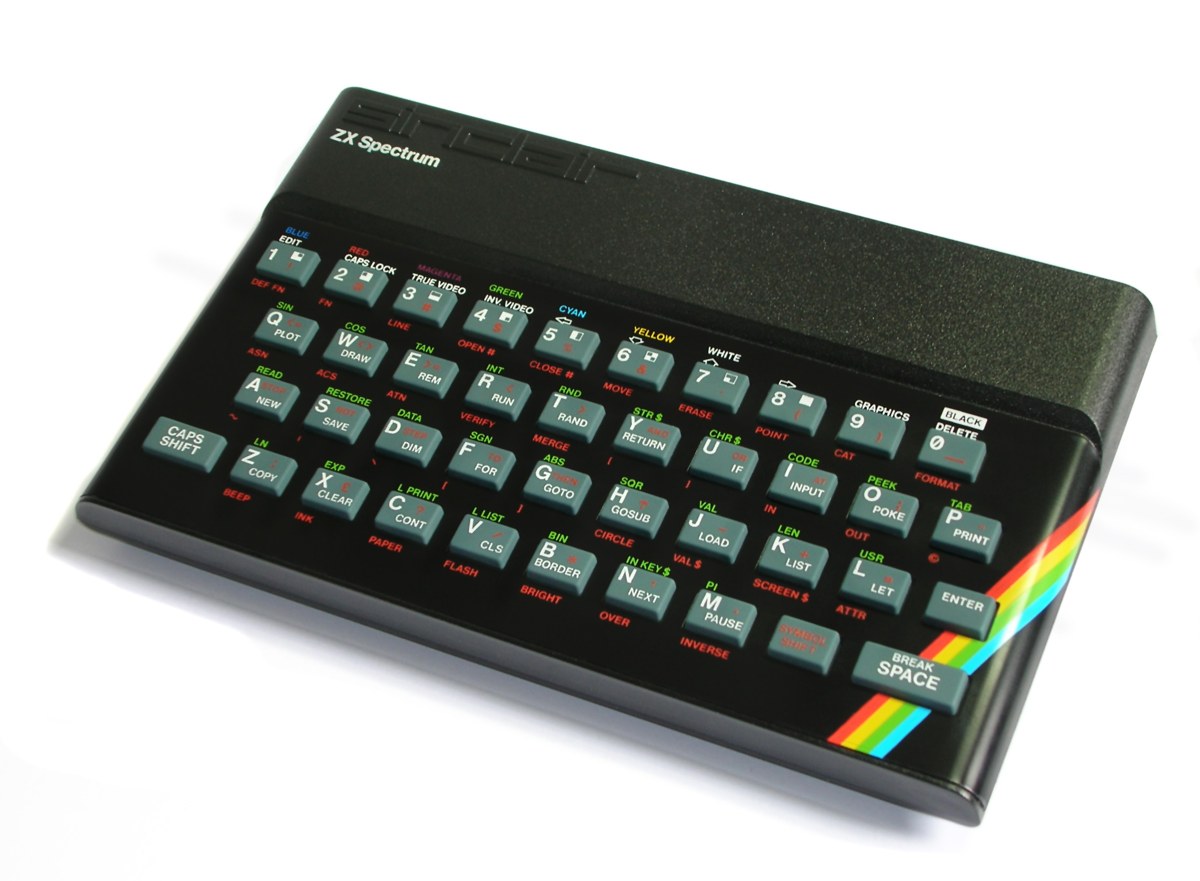
Sinclair Research revealed the ZX Spectrum in London on 23 April 1982. It was designed in Cambridge, built by Timex in Dundee and made to be small, simple and, above all, cheap. The 16K version cost £125 and the 48K version £175, and Sinclair cut those prices to £99 and £129 in 1983. Rick Dickinson designed its black case, rainbow stripe and squashy rubber keyboard, which was famously likened to “dead flesh” (source).
Commodore showed the C64 at the Consumer Electronics Show in Las Vegas in January 1982 and started selling it in the US that August for $595. It reached the UK in early 1983 at £399, more than twice the price of a 48K Spectrum. For that you got a proper typewriter-style keyboard, 64KB of memory and custom chips for graphics and sound that the Spectrum simply didn’t have.
The specs side by side
| ZX Spectrum 48K | Commodore 64 | |
|---|---|---|
| UK launch | April 1982 | Early 1983 |
| UK launch price | £175 (16K: £125) | £399 |
| Processor | Z80A at 3.5MHz | MOS 6510 at about 1MHz |
| Memory | 48KB RAM | 64KB RAM |
| Graphics | 256 x 192, 15 colours | 320 x 200, 16 colours, 8 hardware sprites |
| Sound | Single-channel beeper | SID chip, three channels |
| Keyboard | Rubber keys | Full-travel keys |
| Sold | Over 5 million | 12.5 to 17 million (estimates) |
Sources: ZX Spectrum and Commodore 64 histories and specifications, which draw on period magazines and Commodore sales records.
On paper the Spectrum’s processor looks faster, and in raw clock speed it was. But the C64 had help. Its VIC-II graphics chip handled smooth scrolling and moving sprites in hardware, which meant arcade-style games could glide where Spectrum versions often juddered.
Colour clash vs the SID chip
Each machine had a signature quirk that fans still argue about. On the Spectrum, colour was stored for each 8 x 8 block of the screen rather than for every pixel. Engineer Richard Altwasser designed it that way to fit colour graphics into less than 7KB of memory, but when a sprite crossed a background of another colour, the whole block changed. That’s the famous attribute clash, and it’s why so many Spectrum games went for bold, mostly single-colour play areas.
The C64’s party piece was sound. Bob Yannes designed the SID chip as a true three-channel synthesiser, and he later co-founded the synth maker Ensoniq. In the hands of composers such as Rob Hubbard and Martin Galway, game music on the C64 sounded like nothing else on a home computer. Plenty of people still listen to SID tunes today. The Spectrum’s single beeper was, to be kind, more basic, although clever coders such as Tim Follin squeezed surprising multi-channel music out of it.
Games, tapes and that loading noise
In Britain, both machines lived on cassette tapes. You’d type LOAD “” on a Spectrum, press play on a tape recorder and listen to several minutes of screeching while stripes flickered round the border. C64 owners had their own long waits. Tape software was cheap, and bedroom coders all over the country sold games through magazine adverts.
The Spectrum’s library was huge, with over 24,000 software titles. Manic Miner, Jet Set Willy, Chuckie Egg, Knight Lore and Elite all made their mark, and Ant Attack is credited as the first home computer game with isometric graphics. Ultimate Play the Game, the Stamper brothers’ studio behind Knight Lore, went on to become Rare. The C64 had around 10,000 commercial titles, including Impossible Mission, Paradroid, Boulder Dash and California Games, and it’s credited with kick-starting the demoscene.
Why the rivalry ran so deep
Price was a big part of it. The Spectrum got a lot of British families into computing for the first time, and it was a home-grown success, built in Scotland by a company whose founder was knighted in 1983. The C64 cost more but could do things the Spectrum couldn’t, and its owners never let you forget it. Add the fact that most games came out on both machines, so you could compare versions side by side, and every playground had a running argument.
The Spectrum led in the UK, but the C64 was still Britain’s second-most-popular computer and kept selling strongly in Europe into the 90s. Amstrad bought the Sinclair range in 1986 and the last Spectrums were made in 1992. In March 1994 Commodore said it would stop making the C64 the following year, but it went bankrupt a month later.
Relive it today
Prices change often. Tap Check price on Amazon for today’s price.
You don’t need to hunt down a working 40-year-old machine and a tape deck. Retro Games Ltd makes modern replicas of both, which plug into a TV over HDMI and load games from a USB stick. They’re unofficial, so neither uses the original brand names.
The Spectrum
The Spectrum is a full-size replica with a working rubber-style keyboard. It emulates the 48K and 128K models, outputs at 720p and comes with 48 built-in games, including Manic Miner, The Hobbit and Head Over Heels. You can also drop into BASIC and write your own programs.
THEC64
THEC64 is the full-size C64 replica, with a working keyboard and an upgraded microswitch joystick. It switches between C64 and VIC-20 modes and has 64 built-in games, including California Games, Paradroid and Boulder Dash.
THEC64 Mini Black Edition
Short on space? THEC64 Mini Black Edition is a half-size C64 in black with 25 modern C64 games, including Sam’s Journey and A Pig Quest. Its keyboard is just for show, so you play with the joystick or plug in a USB keyboard.
FAQ
Which sold more, the ZX Spectrum or the Commodore 64?
Worldwide, the C64, with estimates of 12.5 to 17 million. In Britain, the Spectrum, which sold over five million in total and was the UK’s best-selling computer until the Amstrad PCW.
What is colour clash on the ZX Spectrum?
The Spectrum stores colour for each 8 x 8 block of pixels, not each pixel. When two colours meet in one block, one of them changes, which causes the blocky colour bleeding known as attribute clash.
Can I play my old games on the modern replicas?
Yes. Both The Spectrum and THEC64 can load game files from a USB stick, as well as running their built-in games.
Our verdict
On pure hardware, the Commodore 64 wins: better sound, smoother graphics and a proper keyboard. But the ZX Spectrum won Britain, because it was cheap enough for families to buy and it launched a generation of bedroom coders. Honestly, the best answer is the one you had. If you fancy reliving it, both are easy to play again today. Prefer modern gaming? See our RX 9060 XT vs RX 9070 XT comparison or today’s deals.
Images: Sinclair ZX Spectrum 48K by Bill Bertram, via Wikimedia Commons, licensed CC BY-SA 2.5 (resized). Commodore 64 by Evan-Amos, via Wikimedia Commons, public domain.